Table of Contents
- Most Sacred Mountain of Mount Kailash
- For Hindus
- Significance in Buddhism
- Significance in Jainism and Bon
- The Sacred Parikrama of Mount Kailash
- Mystique and Scientific Curiosity
- How to Reach Kailash Mansarovar?
- Best Time for the Mount Kailash Tour
- What Sets Ojas Travel Apart?
- Final Thoughts
- Frequently Asked Questions
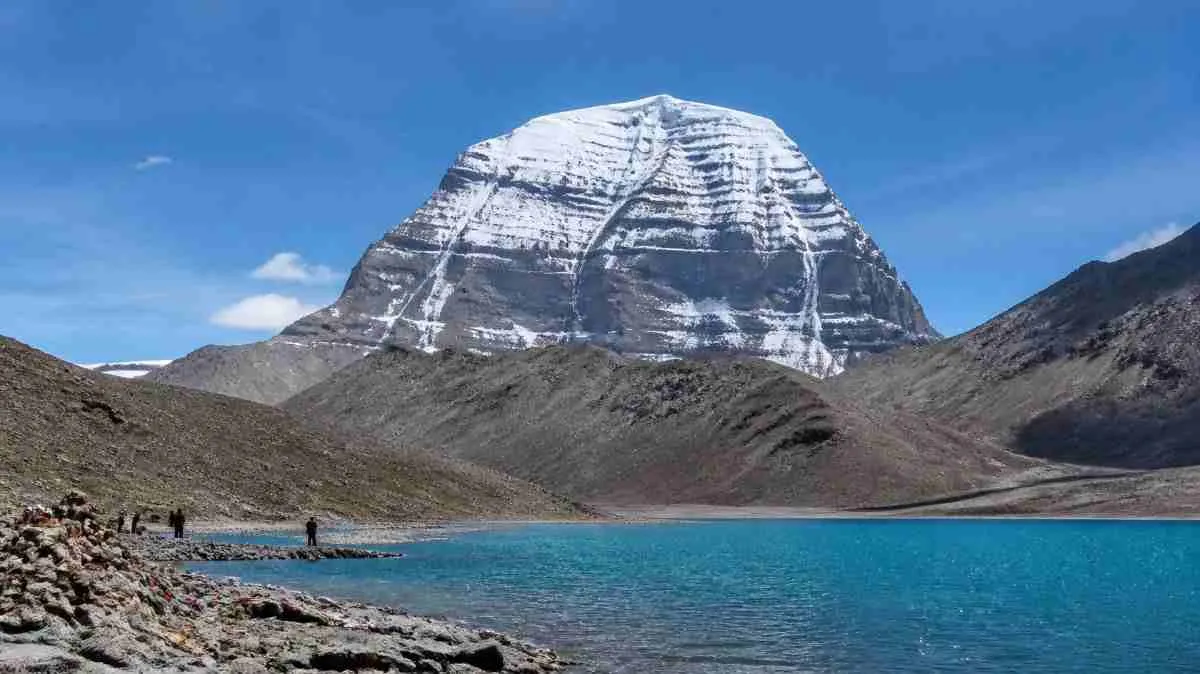
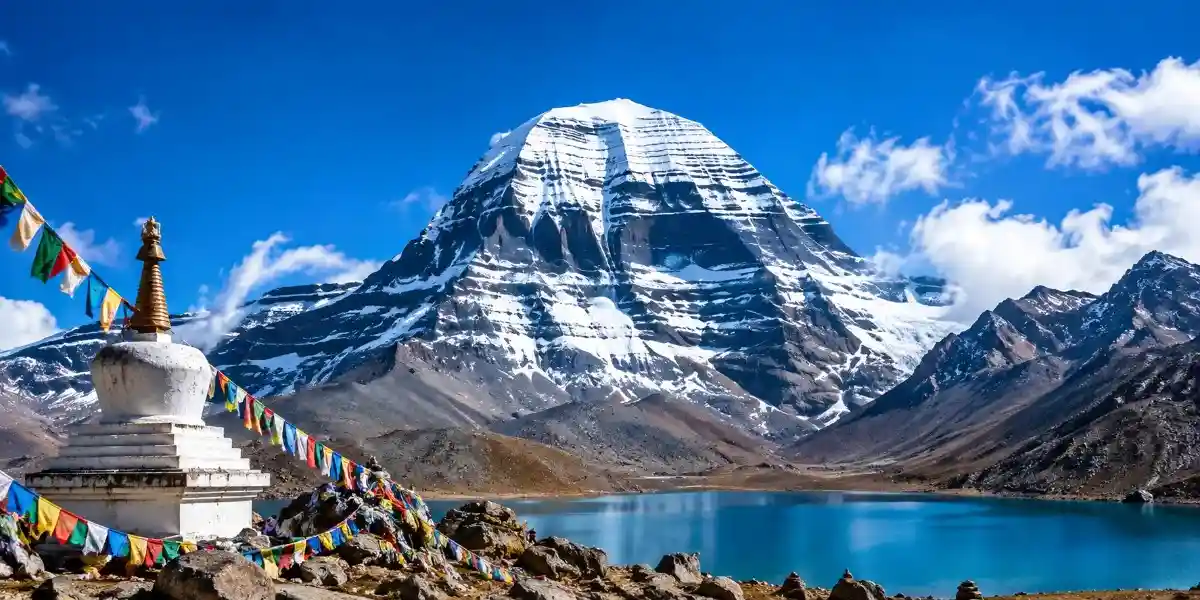
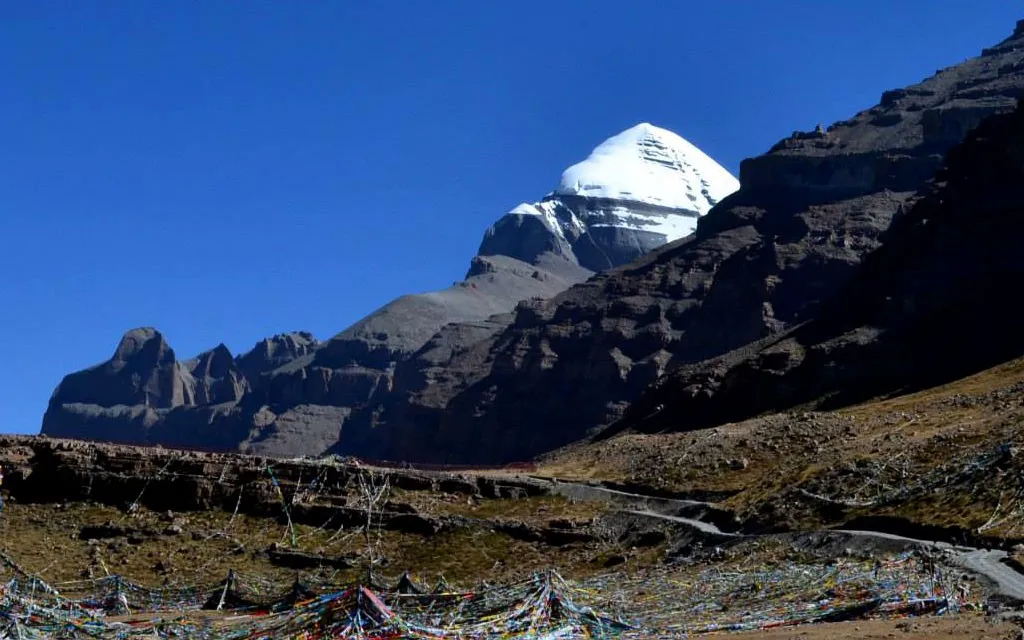
Towering at 6,638 meters (21,778 ft) in the remote Trans-Himalayan region of Mount Kailash, this majestic peak is far more than just a mountain. Located in Tibet, it is considered one of the holiest spiritual destinations in the world. Sacred to multiple religions including Hinduism, Buddhism, Jainism, and Bon, the mountain symbolizes divine power, spiritual purity, and universal harmony. Despite its relatively modest height compared to other Himalayan peaks, it has never been climbed, preserving its mystery and deep spiritual significance for millions of devotees around the globe.
For pilgrims, seekers and travellers, a Mount Kailash pilgrimage is not simply a journey across high-altitude terrain; it is a transformative spiritual experience that can lead to the cleansing of karma and bring inner awakening.
Most Sacred Mountain of Mount Kailash
For Hindus
In Hindu tradition, Mount Kailash is considered the eternal abode of Lord Shiva. According to ancient scriptures, Shiva resides here in deep meditation along with Goddess Parvati. The mountain is also believed to be the “axis of the world” or the “centre of the universe” and is considered to be the “abode of the gods.”
According to Hindu mythology, the kailash parikrama, or circumambulation of the mountain, wipes away the sins accumulated in many lives. One round of the mountain is said to remove the sins of a lifetime, and 108 rounds are believed to lead to enlightenment.
Near the mountain is the Lake Mansarovar, which is one of the highest freshwater lakes in the world, at an altitude of about 4,590 meters. A dip in the lake is said to cleanse the spirit before embarking on the trek to Mount Kailash.
Significance in Buddhism
In Buddhism, Mount Kailash is known as “Kang Rinpoche,” or “Precious Snow Jewel.” It is also known as the “abode of Demchok (Chakrasamvara)” and represents the “paradise of ultimate bliss.” It is also the “centre of the universe” in Buddhist cosmology.
The kailash parikrama is performed by Buddhists in a clockwise direction as a form of “moving meditation.” The trek is not easy due to the high altitude and rough terrain, but the spiritual experience can be transformative nd uplifting for some travellers.
Significance in Jainism and Bon
Mount Kailash also has significance in Jainism, as it is believed that the first Tirthankara, Rishabhadeva, achieved liberation (moksha) in the vicinity of Mount Kailash.
For the followers of the Bon religion, the ancient religion of Tibet, Mount Kailash is considered to be the seat of spiritual power and the axis of the world. Interestingly, Bon followers have always performed the parikrama in a counterclockwise direction, unlike Hindus and Buddhists.
This multi-religious significance makes the Mount Kailash Tour one of the most unique spiritual experiences in the world.
The Sacred Parikrama of Mount Kailash
The complete Kailash parikrama is 52 kilometres (32 miles) long and takes a total of three days to complete. The maximum point reached during the parikrama is the Dolma La Pass, which is about 5,630 meters.
Though not a climbing experience, the Mount Kailash trek requires extreme physical fitness, acclimatisation, and mental toughness. The experience is often described as physically demanding and spiritually enlightening.
It is essential to note that the ascent of Mount Kailash is strictly forbidden due to its religious significance.
Mystique and Scientific Curiosity
Mount Kailash has many myths associated with it. It is believed to have some unique magnetic properties or some supernatural powers. However, there is no scientific basis for the claims of magnetic anomalies or supernatural powers. The mystique associated with the mountain is primarily due to its symmetrical pyramid shape and religious significance.
How to Reach Kailash Mansarovar?
A Mount Kailash trip is usually undertaken as part of the renowned Kailash Mansarovar pilgrimage circuit. Indian and international pilgrims generally travel via Nepal into Tibet.
The most common routes include:
- Kailash Mansarovar by Road: An overland journey through Nepal into Tibet, allowing gradual acclimatisation.
- Kailash Mansarovar Yatra by Helicopter Route: A shorter option via Nepalgunj and Simikot, reducing travel time but still requiring trekking for the parikrama.
Both routes require permits and travel must be arranged through authorised tour operators.
Best Time for the Mount Kailash Tour
The best time for the Kailash trek is from May to September when the weather is relatively more consistent. The Saga Dawa Festival, which takes place in May or June, is considered a particularly auspicious time for the Kailash parikrama. Nevertheless, the mountain is at a high altitude, and the climate remains cold throughout the year, with the possibility of sudden changes in the weather. It is essential to prepare for the trek and acclimatise to the environment.
What Sets Ojas Travel Apart?
Planning a sacred Himalayan pilgrimage involves complex permits, border formalities, logistics, and high-altitude safety arrangements. Ojas Travel stands out as a trusted and experienced organiser of the Kailash Mansarovar Tour Package, ensuring seamless coordination from start to finish.
Ojas Travel provides:
- Kailash Mansarovar Yatra by land (road) route
- Kailash Yatra by Helicopter route options
- Pilgrimage tours that can also include Muktinath Temple and other temples in and around Nepal
- Full support for permits, experienced guides, and an optimal acclimatisation strategy
Going beyond the pilgrimage package, Ojas Travel provides a wide range of travel experiences, from cultural and family vacations to honeymoon packages, trekking adventures, and family Nepal tour packages.
With expert planning and customised itineraries, Ojas Travel ensures your Mount Kailash pilgrimage is spiritually enriching, secure, and perfectly organised.
Final Thoughts
Mount Kailash is not simply a destination; it is a calling. The sacred Kailash Parikrama and the timeless tradition of the Mount Kailash pilgrimage have guided devoted souls for centuries, and that pull grows no weaker with time. Whether you arrive seeking divine connection, this journey leaves an imprint that no words can fully capture. Long after you return home, Kailash stays with you, in your spirit, in your silence, and in the way you see the world.
Frequently Asked Questions
What is the spiritual importance of Mount Kailash?
Mount Kailash is sacred to all four religions of Tibet: Hinduism, Buddhism, Jainism, and Bon. It is believed to be the dwelling place of Lord Shiva and a point where the universe’s cosmic energy is present.
Can a helicopter fly over Kailash?
Helicopter services are not permitted to fly directly over or land on Mount Kailash due to the restricted airspace. However, helicopter services are available in the nearby border regions of Hilsa, which helps to reduce the distance to the holy site.
Is there a magnetic anomaly at Kailash?
Scientists have found no evidence that supports the claim that Mount Kailash has a magnetic anomaly. The phenomenon exists as a spiritual concept that people perceive as a myth.
How many kilometres is Mount Kailash?
Mount Kailash stands at a height of 6,638 meters. The Kailash parikrama circuit around the mountain is 52 kilometres long.