Learn how to plan a complete tour to Mount Kailash and Lake Mansarovar from the USA for American passport holders, including NRIs with US citizenship. Get detailed information about Tibet travel permits, Chinese visas, transportation, accommodation, meals, altitude preparation, tour routes, and other essential travel guidelines for a smooth and spiritually fulfilling Kailash Mansarovar Yatra.
Why Visit Kailash Mansarovar for Inner Peace and Spiritual Awakening?
Spirituality represents the deep sense within an individual that there is something in the universe far greater than oneself. It is the awareness that life is not only about material success, wealth, or power, but about being truly human—connected, conscious, and at peace.
For centuries, people across the world have journeyed from one place to another in search of inner peace and a deeper understanding of life’s purpose. With more than 4,000 religions in the world, Hinduism is widely regarded as a rich collection of traditions, philosophies, and spiritual practices, making it one of the most diverse and meaningful spiritual paths.
In Hindu belief, Lord Shiva is worshipped as the Supreme Being, and Mount Kailash is considered His eternal abode, where He resides with Goddess Parvati and their sons Ganesha and Kartikeya. Located in the remote Himalayas, Mount Kailash is regarded as one of the most sacred peaks in the world. Many spiritual seekers also refer to it as the “Axis Mundi” or the center of the universe, a concept that has been discussed in various scientific and philosophical studies.
The spiritual energy of this region is said to be so powerful that it can only be truly understood by visiting the holy land itself. Devotees often describe an overwhelming sense of presence, peace, and divine connection upon reaching Kailash Mansarovar.
Through my years of experience, I have had the privilege of organizing journeys to this sacred destination and guiding pilgrims from the USA to Kailash Mansarovar. I am happy to share detailed travel insights and practical information for those interested in undertaking this life-changing pilgrimage. You are welcome to explore the details and join one of our fixed departure group journeys organized each year for devotees and spiritual seekers.
How to plan a tour to Mount Kailash Mansarovar from USA?
All Kailash Mansarovar trips from the USA for NRIs and American passport holders require careful planning, as this is a high-altitude spiritual journey with complex logistics and changing travel regulations. One of the most important steps is choosing a reliable and experienced Kailash Mansarovar travel advisor who is actively organizing tours from the USA and stays updated with the latest travel conditions, permits, and regional developments.
Even for experienced tour operators, organizing Kailash Mansarovar Yatra is not easy due to multiple factors such as government regulations, weather conditions, altitude challenges, and permit approvals. It requires strong coordination and on-ground expertise in both India/Nepal and Tibet regions.
Since 2019, Ojas Travel has been organizing Kailash Mansarovar tours for American NRIs with a strong track record and a reported success rate of around 97%. Over the years, Kailash tours from the USA for NRIs and American travelers have been made more accessible through structured group departures, experienced handling, and personalized support.
Ojas Travel offers dedicated Kailash Yatra advisors who assist travelers at every stage of planning. These advisors are available to answer queries, explain routes, clarify visa and permit requirements, and help pilgrims understand the physical and logistical aspects of the journey before booking.
The key recommendation is to speak with a knowledgeable travel advisor early in the planning process. Having an open discussion helps travelers understand the journey in detail, prepare properly, and make informed decisions before confirming their Kailash Mansarovar Yatra from USA.
Best Starting Points for Kailash Mansarovar Yatra from the USA?
Many travelers from the USA assume that Kathmandu, Nepal is the only entry point for the Kailash Mansarovar Yatra for foreign passport holders. While Kathmandu is indeed the most commonly used gateway, this is not the only option available.
In reality, most pilgrims from the USA fly to Kathmandu from major cities such as New York, San Francisco, Dallas, Chicago, and others, mainly because many tour operators design group departures through this route. From Kathmandu, travelers usually proceed toward the Nepal–Tibet border via the Simikot–Hilsa route, which involves a short helicopter ride to reach the Purang (Taklakot) entry point into Tibet. This remains one of the most popular and convenient ways to join a fixed departure group for Kailash Mansarovar.
However, what many travelers are not aware of is that there are several alternative and more scenic routes that offer richer travel experiences, sightseeing opportunities, and different cultural perspectives.
Some of the exciting options include:
a) USA to Beijing → Lhasa → Road Journey to Mount Kailash
Travelers can fly from the USA to Beijing and then take a flight or train to Lhasa. From Lhasa, the journey continues overland through the Tibetan plateau toward Mount Kailash, offering breathtaking landscapes and gradual altitude acclimatization.
b) USA to Chengdu → Lhasa → Overland Kailash Route
Another popular route is flying from the USA to Chengdu, followed by a connecting flight to Lhasa. From there, pilgrims begin the road journey toward Kailash Mansarovar. This route combines modern Chinese cities with high-altitude Tibetan travel.
c) USA to Beijing/Chengdu → Fly to Ngari Gunsa Airport → Short Drive to Kailash
For those seeking a faster and more direct option, travelers can fly to Beijing or Chengdu and then connect to Lhasa, followed by a flight to Ngari Gunsa Airport (Ali Kunsha Airport), which is the nearest airport to Mount Kailash. From there, it is a relatively short drive to reach the sacred region.
For budget-conscious travelers, however, the traditional Kathmandu overland route remains the most economical option. This approximately two-week journey involves road travel from Kathmandu through Nepal into Tibet, gradually leading to Mount Kailash while passing through stunning Himalayan terrain.
Each route offers a different balance of cost, comfort, altitude experience, and sightseeing, allowing travelers from the USA to choose based on their preference and travel style.
Do American passport holders need a Visa for travelling to Mount Kailash Mansarovar?
Yes, all American passport holders—including NRIs with U.S. citizenship as well as OCI cardholders holding American passports—are required to obtain a valid China visa before undertaking the Kailash Mansarovar Yatra.
For American travelers and NRIs traveling on a U.S. passport, a Chinese group visa is mandatory when entering Tibetan territory, including routes starting from Kathmandu, Nepal. This visa is typically arranged through an authorized tour operator as part of a group pilgrimage package.
In addition, travelers must ensure that their passport has a minimum validity of at least six months from the date of entry into Tibet/China. Without a valid China visa, entry into Tibet will not be permitted under any circumstances, which would result in cancellation of the journey.
Therefore, it is essential for all American citizens and NRIs with U.S. passports to complete visa formalities well in advance through their Kailash Mansarovar tour operator to ensure a smooth and uninterrupted pilgrimage experience.
Complete Guide to Kailash Mansarovar Trip from Kathmandu Route
Day 01 - 05
Fly from USA to Kathmandu, Nepal to join Kailash Mansarovar Yatra
Begin your journey to Kailash Mansarovar by traveling from the USA to Nepal, which serves as the main starting point for the pilgrimage via the Kathmandu route. There are both direct and connecting flight options available from major international airports in the United States, including New York, San Francisco, Chicago, Dallas, and others, to Tribhuvan International Airport in Kathmandu, Nepal.
For most Kailash Mansarovar tour packages from the USA, international airfare is not included in the package cost. However, travelers can request assistance from the tour coordinator or representative of Ojas Travel to arrange flight bookings at an additional cost, if required.
Along with booking your flight, it is strongly recommended to purchase comprehensive travel and medical insurance before departing from your home country, as the journey involves high-altitude travel and remote terrain conditions.
A detailed checklist of required documents for American travelers undertaking the Kailash Mansarovar Yatra can be obtained from the official office of Ojas Travel or through your designated tour consultant before departure.
At Kathmandu
After a long international flight, upon arrival at Tribhuvan International Airport in Kathmandu, you will proceed to the immigration counter to obtain a Nepal Visa on Arrival (VoA), which is available for eligible foreign travelers.
Once the visa process is completed, you will clear immigration and customs formalities inside the airport. After collecting your luggage, you will exit the terminal where our company representative will be waiting outside the arrival area to receive you.
The representative will assist you with your transfer and ensure a comfortable drive to your pre-booked hotel in Kathmandu, where you can relax and prepare for the onward journey to Kailash Mansarovar.
Processing China entry visa at Kathmandu
The China visa for American passport holders is issued by the Chinese Embassy in Kathmandu. From April 2026 onward, the embassy has made it mandatory for all non-Indian passport holders to complete biometric enrollment before submitting their passport for the China visa application.
During this process, our Kailash Yatra representative will collect your passport and supporting documents and submit them to the embassy on your behalf. For travelers planning the Kailash Mansarovar pilgrimage to the Tibet Autonomous Region (TAR), the China visa approval process typically takes two to three working days, depending on embassy processing timelines and documentation completeness.
Moving around in Kathmandu
During your stay in Kathmandu, guided visits to some of the city’s most important spiritual sites—such as Pashupatinath Temple, Budhanilkantha (Vishnu Narayan) Temple, and Guhyeshwari Mata Temple—are usually included as part of the Kailash Mansarovar Yatra package for USA passport holders.
These temple visits offer pilgrims an opportunity to begin their journey with spiritual preparation and blessings before proceeding toward Mount Kailash.
If you wish to explore more destinations in and around Kathmandu, such as a visit to Muktinath Temple or experience a scenic Himalayan mountain flight, you can request additional arrangements through your dedicated tour coordinator at the Ojas Travel office in New Delhi. They will assist in customizing your itinerary based on your interests and available time.
Day 06 - 07
Fly to Nepalgunj from Kathmandu airport
Your Kailash Mansarovar Yatra, which began from the USA, now moves closer to its spiritual destination as you board a short flight from Kathmandu to Nepalgunj. This approximately one-hour journey takes you to the western region of Nepal, an area that is less developed in terms of road infrastructure compared to central and eastern Nepal.
Nepalgunj serves as an important gateway for the Kailash Mansarovar route from Nepal. Despite being a small border city near India, it offers reasonably comfortable hotel accommodations for pilgrims to rest and prepare for the onward journey.
The city shares a close connection with India and is easily accessible by road from nearby cities such as Lucknow, Bareilly, and other regions of Uttar Pradesh, making it a significant transit point for travelers heading toward the Himalayan pilgrimage routes.
Fly to Simikot from Nepalgunj
In your Kailash Mansarovar Yatra from the USA, one of the most critical and weather-dependent segments is the flight from Nepalgunj to Simikot via Nepalgunj. This sector is known for its logistical challenges, as it operates entirely on weather conditions and limited mountain aviation infrastructure.
Flights between Nepalgunj and Simikot take approximately 40–50 minutes, depending on wind speed and weather patterns. Due to the region’s unpredictable Himalayan climate, delays and schedule changes are common. Only a few airlines in Nepal operate this route, typically using small Dornier aircraft with a seating capacity of around 17–18 passengers per flight.
Your tour guide and ground team will coordinate these flights, and it is important to strictly follow all instructions provided, as operations are highly dependent on real-time weather updates and airport availability.
Simikot, located in Karnali Province, is a remote hill town in the upper western Himalayas of Nepal and serves as the administrative center of the Humla district. The town is not connected to Nepal’s national road network, making air travel the only practical mode of access.
Despite its remoteness, Simikot offers basic yet comfortable accommodation in small, family-run guesthouses. These lodges typically provide simple rooms along with local meals, kitchen facilities, and shared bathrooms.
Pilgrims usually spend one night in Simikot to rest and acclimatize before continuing the journey toward Tibet, marking a key transition point in the Kailash Mansarovar Yatra that began from the USA.
Chartered Helicopter flight to Hilsa
From Simikot, your guide will arrange the next leg of your journey—a helicopter flight to Hilsa. This short but spectacular aerial transfer takes approximately 25–30 minutes and offers breathtaking views of the snow-covered peaks and deep valleys of the Karnali region.
As you fly over the remote Himalayan landscape, you will witness the raw natural beauty of western Nepal from a bird’s-eye perspective. The journey is both scenic and memorable, providing a unique highlight of the Kailash Mansarovar Yatra.
Upon landing in Hilsa, a small Nepalese village located near the Tibetan border, you will be one step closer to entering Tibet and continuing your pilgrimage toward Mount Kailash.
Day 08-09
Burang (Taklakot) the first place to stay in Tibet
After completing immigration and customs formalities at the border, you will continue your journey by luxury bus to your hotel in Burang (Taklakot). En route, there may be additional security checks and screening procedures before proceeding to your accommodation in Burang County.
Burang is a well-established settlement near the Nepal–Tibet border, covering a large mountainous region and home to a modest population. It serves as an important acclimatization stop for pilgrims entering Tibet. The town offers several reasonably comfortable hotels with basic modern facilities, including attached bathrooms and essential amenities.
At Burang, you will have two days to rest and acclimatize to the high altitude before continuing further toward Mount Kailash. During this time, you may explore the local area, visit nearby markets, or simply rest to help your body adjust.
It is strongly recommended to stay well hydrated, eat light and nutritious meals, and avoid overexertion, as your body begins adapting to elevations above 4,000 meters. The upcoming stages of the Kailash Mansarovar Yatra from the USA will involve higher altitudes and require good physical fitness and careful acclimatization for a safe and successful journey.
Exploring Lake of Rakshas Tal and holiest Lake Mansarovar
After spending two nights in Taklakot (Burang), it is now time to proceed toward the most spiritually significant phase of your journey. Since leaving your home in the USA and beginning the Kailash Mansarovar Yatra, this is the moment you have been waiting for.
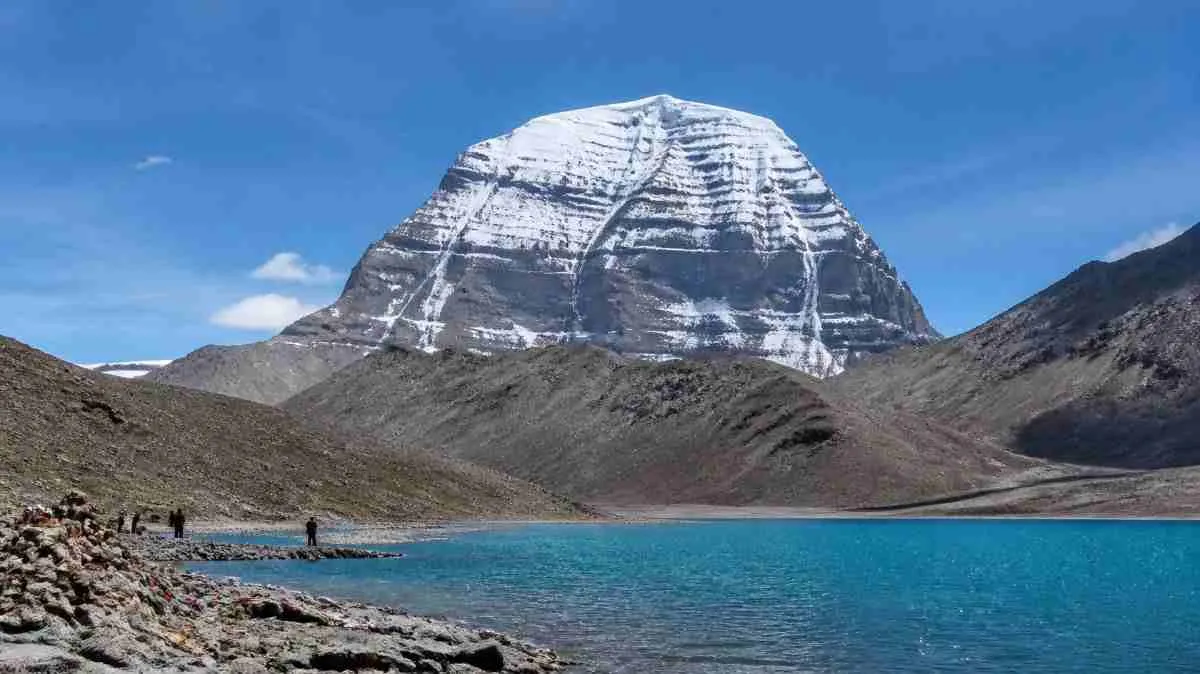
As you set out from Taklakot, remain calm and mindful, as within a few hours of driving, you may catch your first breathtaking glimpse of sacred Mount Kailash. Majestically rising above the Himalayan landscape, the mountain appears almost pyramid-like or diamond-shaped, leaving many pilgrims in awe of its divine presence.
Before reaching Lake Mansarovar, you will pass by a strikingly beautiful lake on the left side of the road—Rakshas Taal (also known as Ravana Tal). With its deep turquoise waters and dramatic surroundings, this lake is often referred to in local tradition as the “Lake of Demons.” According to belief, it represents negativity, and pilgrims are advised not to touch its waters.
After spending some time near Rakshas Taal, you will continue your drive onward to the sacred Lake Mansarovar, the next profound milestone of your Kailash Mansarovar pilgrimage.
Activities to do near Lake Mannsarovar
Lake Mansarovar offers very limited accommodation options. There are a few basic guesthouses located within walking distance of the sacred lake. The stay here is typically in simple dormitory-style rooms, designed to accommodate pilgrims in a shared setting.
Facilities at this altitude are extremely basic, and toilet arrangements can be a challenge, as most guesthouses do not provide attached bathroom facilities. Pilgrims are advised to be prepared for very simple living conditions during this part of the journey.
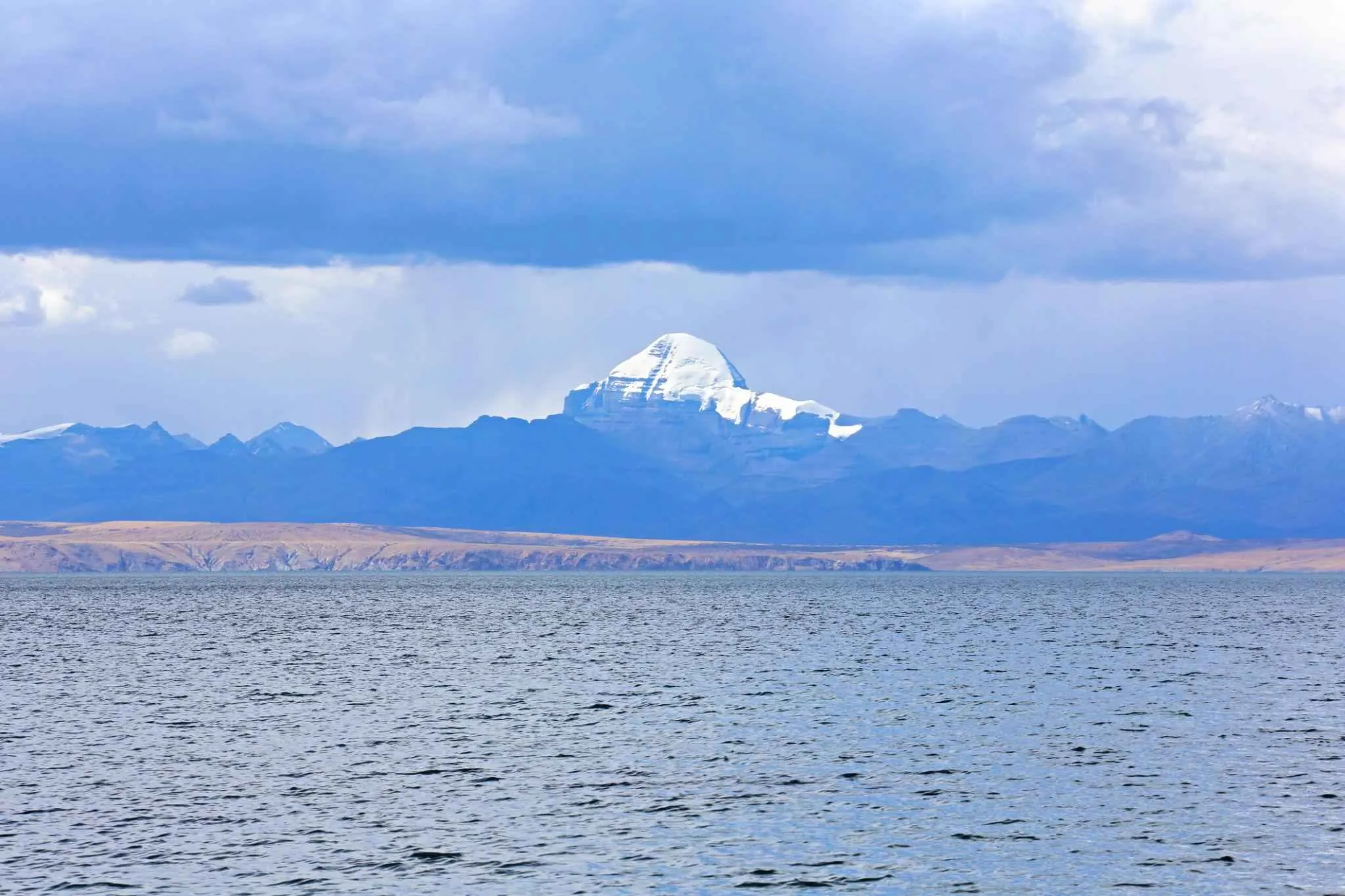
At Lake Mansarovar, devotees traditionally perform holy rituals such as bathing in the sacred waters (as per individual customs), prayer ceremonies, and puja. After completing these spiritual activities, pilgrims may proceed for the parikrama of the lake by bus, arranged by the tour guide. The full circuit around Lake Mansarovar covers approximately 95 km and typically takes 3–4 hours, including stops, depending on permissions from local authorities.
The night view of Lake Mansarovar is especially revered, particularly during full moon nights, when the lake is believed to reflect extraordinary spiritual energy and natural beauty. Groups traveling from the USA on Kailash Mansarovar Yatra often get an opportunity to witness this serene night atmosphere, creating a deeply memorable experience.
According to traditional belief, the divine presence of Lord Shiva and Goddess Parvati is especially felt around Lake Mansarovar during full moon nights, adding to its spiritual significance for pilgrims.
Day 10-12
At Mount Kailash
In the morning, a short drive from Lake Mansarovar brings the group to Darchen, the base town located near the foothills of sacred Mount Kailash. Darchen serves as the main starting point for the kora (parikrama) and logistical arrangements for the pilgrimage.
From Darchen, your guide will arrange a further short drive to Yam Dwar, situated to the south of Mount Kailash. Yam Dwar is considered the traditional gateway and starting point for the trek around the holy mountain.
At Yam Dwar, pilgrims begin the parikrama of Mount Kailash. Facilities are available for those who require support services such as ponies and porters, which can be arranged through authorized counters for a paid service. From here, devotees set out on the sacred circumambulation, marking one of the most spiritually significant moments of the entire Kailash Mansarovar Yatra.
First day trekking of Mount Kailash
The Mount Kailash parikrama is typically completed over three days, covering a total trekking distance of approximately 42 km. While the first day of the trek may appear relatively easy due to its mostly gradual and flat terrain, the high altitude and reduced oxygen levels can make it physically demanding for many pilgrims.
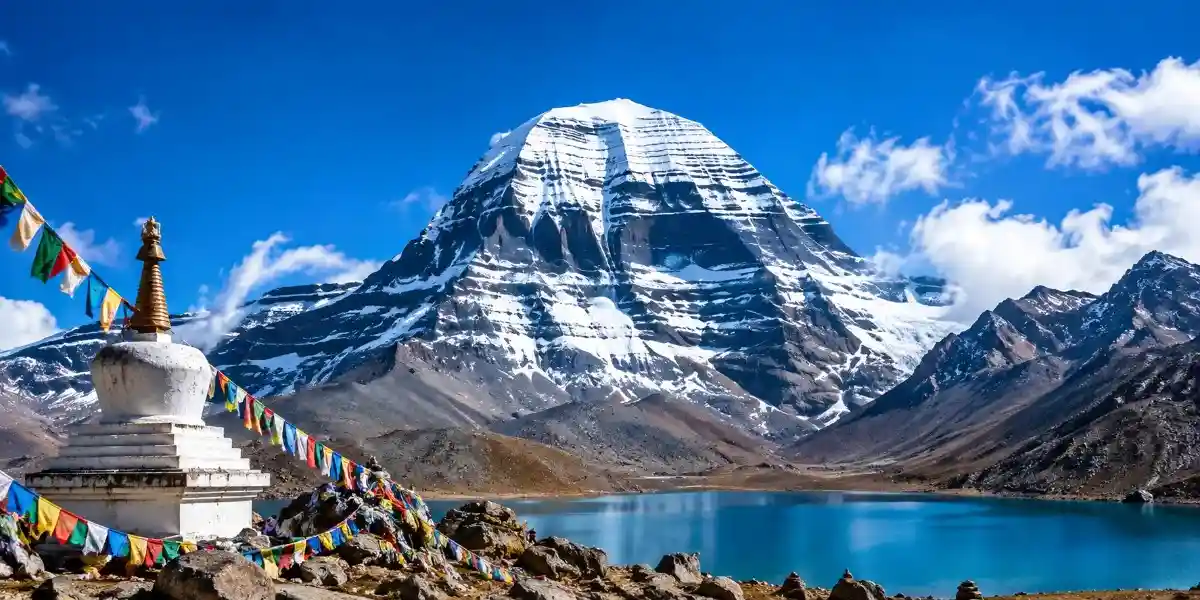
On the first day, you will trek around 12 km, leading you to Dirapuk. From this point, you are rewarded with a powerful and unforgettable view of the North Face of Mount Kailash. The towering, pyramid-shaped mountain stands directly in front of you, creating a deeply spiritual and awe-inspiring moment for devotees. Many pilgrims believe this is the sacred face of Lord Shiva, making Dirapuk one of the most significant points of the entire Kailash Mansarovar Yatra.
Staying near the North Face of Mount Kailash at Dirapukh Gompa
On reaching Dirapuk, you will stay in a basic dormitory accommodation where a simple bed is provided along with blankets or a quilt for the night. The facilities here are very modest, designed to support pilgrims at high altitude during the Kailash parikrama.
The accommodation is located quite close to Mount Kailash, allowing you to step outside at any time and witness the breathtaking view of the sacred mountain. The experience of seeing the majestic North Face of Kailash in such close proximity creates a deeply peaceful and unforgettable atmosphere for pilgrims.
Watching the amazing Golden Kailash during sunrise
The next morning marks another significant day of your Kailash Yatra from the USA. At sunrise, devotees step out early from their accommodation to witness a truly magical moment as the first rays of sunlight touch Mount Kailash.
During this time, the mountain appears to change its colors gradually, shifting with the movement of light across its snow-covered peak. This natural phenomenon creates a deeply serene and spiritual atmosphere, leaving pilgrims in awe of the sacred beauty of Mount Kailash at dawn.
Second day trekking of Mount Kailash
After the golden darshan of Mount Kailash at sunrise, it is time to have a quick breakfast and begin the second day of trekking toward Zuthulpuk. This day is considered the most challenging part of the entire Kailash Mansarovar Yatra, not only because of the difficult terrain but also due to the extreme altitude.
The trail leads you through rugged and demanding mountain paths, including the highest point of the parikrama—the Dolma La Pass, which stands at approximately 18,600 feet. Crossing this pass requires strong physical endurance, determination, and careful acclimatization, as the oxygen level is very low at this elevation.
Crossing Dolma La Pass & Gauri Kund
The trek from Dirapuk to Dolma La Pass is widely considered the most demanding section of the entire Kailash Mansarovar Yatra and can be challenging for pilgrims of all ages and fitness levels. The route includes rocky terrain, a steep ascent of roughly three kilometers, followed by a sharp and strenuous descent.
Upon crossing the Dolma La Pass, you descend toward the sacred Gauri Kund, a small high-altitude lake surrounded by dramatic mountain scenery. Pilgrims often pause here briefly to rest and reflect at this spiritually significant site.
From Gauri Kund, the trail continues onward to Zuthulpuk, which serves as the final overnight stop of the Kailash parikrama. This marks the completion of the most difficult and significant trekking day of the journey.
Reaching Zuthulpukh Gompa
After completing approximately 22 km of one of the most challenging treks in Asia during your Kailash Mansarovar Yatra from the USA, you will arrive at Zuthulpuk (Gopma). Here, accommodation will be arranged in a simple guesthouse for an overnight stay.
Last day trekking back to Darchen
In the morning, after a light breakfast, you may visit the nearby Gopma area before continuing your descent toward Darchen, where the rest of your group will be waiting.
The final stretch of the trek covers approximately 7–8 km on a relatively easier downhill path. After completing this section, you will reach the designated pickup point, where a vehicle will be arranged to transfer you comfortably to your hotel in Darchen.
Day 13-16
Drive to Burang (Taklakot)
After reuniting with your group members at Darchen, you will enjoy a comfortable drive back to Burang (Taklakot). Upon arrival, your guide will arrange your stay in a hotel for the night.
The hotel rooms are equipped with basic modern amenities, including attached bathrooms, allowing you to rest and refresh after completing the Kailash Mansarovar pilgrimage. This is a well-deserved period of relaxation following your spiritual journey around Mount Kailash.
Crossing the border to reach Nepal
In the morning, your guide will coordinate with the operations team in Nepal to arrange your return journey. Depending on weather and flight schedules, your onward travel from Taklakot (Tibet) back to Kathmandu will be organized via helicopter and connecting flights.
You will first travel by road from Taklakot to Hilsa (Nepal border point), after completing exit formalities. From Hilsa, you will board a chartered helicopter to Simikot, enjoying a final aerial view of the Himalayan landscape.
From Simikot, you will take a connecting flight to Nepalgunj, followed by another flight to Kathmandu. Upon arrival in Kathmandu, you will be transferred to your hotel for a comfortable and leisurely stay, allowing you to rest after completing your sacred Kailash Mansarovar Yatra.
Journey back to USA
Two weeks ago, you began your journey from the USA to Nepal for the sacred Kailash Mansarovar sojourn. Today, your Kailash Yatra comes to a close as you prepare to fly back home, carrying with you unforgettable memories of this profound spiritual experience and a journey that will stay with you for a lifetime.
How Travelers from the USA Can Obtain Permits for the Mount Kailash Tour
In most cases, Kailash Mansarovar tour packages include the permit arrangements as part of the overall service. Since travel to Tibet involves restricted regions, special permits are required, which are typically obtained and processed by authorized tour operators on behalf of the travelers.
Ojas Travels has a dedicated team that handles the arrangement of Tibet travel permits for visitors, including access to restricted areas such as the Mount Kailash region. This ensures that all necessary documentation is prepared in advance for a smooth and hassle-free journey.