
- What Is Kailash Mansarovar? A Grand Pilgrimage Through Tibet
- What Is Adi Kailash? India's Own Sacred Peak in Uttarakhand
- Adi Kailash vs Kailash Mansarovar: Altitude, Distance and Permits Compared
- Adi Kailash Route From Delhi
- Kailash Mansarovar Routes From Nepal
- Kailash Mansarovar Yatra Cost From Delhi and What Affects It
- Which Pilgrimage Suits Senior Citizens and First-Time Trekkers
- Why Travel With Ojas Travel
- Conclusion
- FAQs
Every year, thousands of devotees stand at the same crossroads. Should they trek to Adi Kailash in Uttarakhand or take on the grand Kailash Mansarovar yatra through Tibet? Both mountains carry deep spiritual weight, both sit high in the Himalaya, and both promise a journey that stays with you long after you return home.
Yet Adi Kailash vs Kailash Mansarovar is not really an either-or question, since the two pilgrimages differ in distance, permits and altitude. Some pilgrims choose the Indian mountain first to test their fitness for altitude, while others go straight for the original abode of Lord Shiva.
This guide breaks down the real Adi Kailash and Kailash Mansarovar difference, so you can pick what suits your time and devotion best.
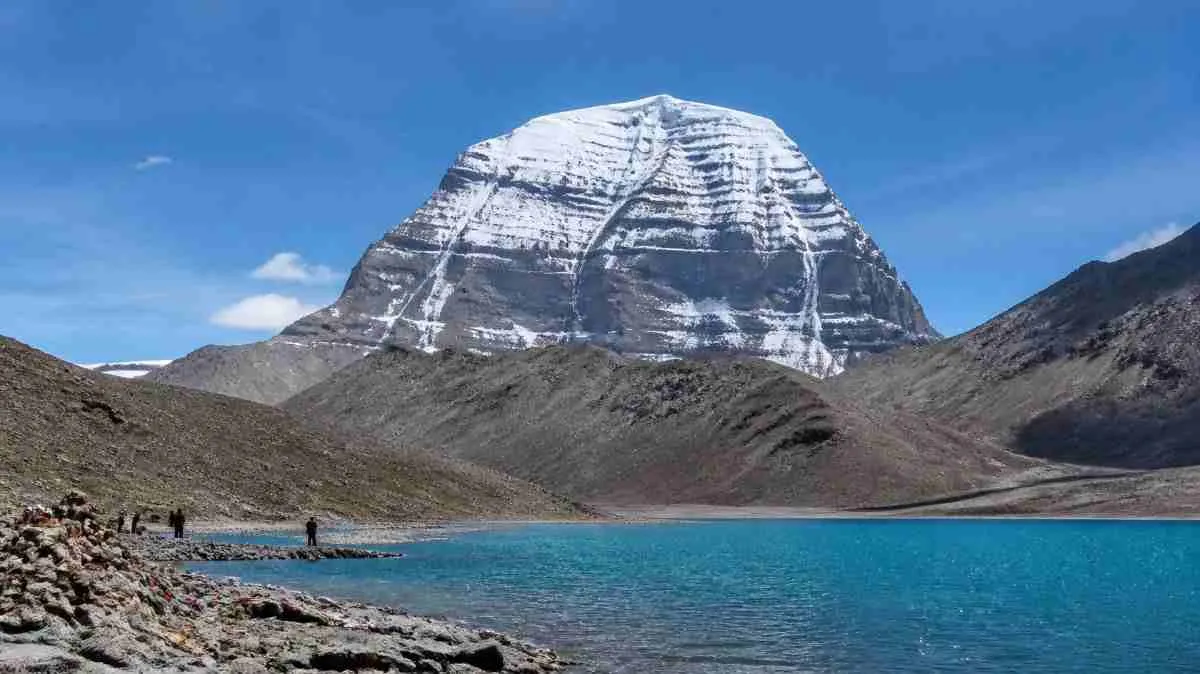
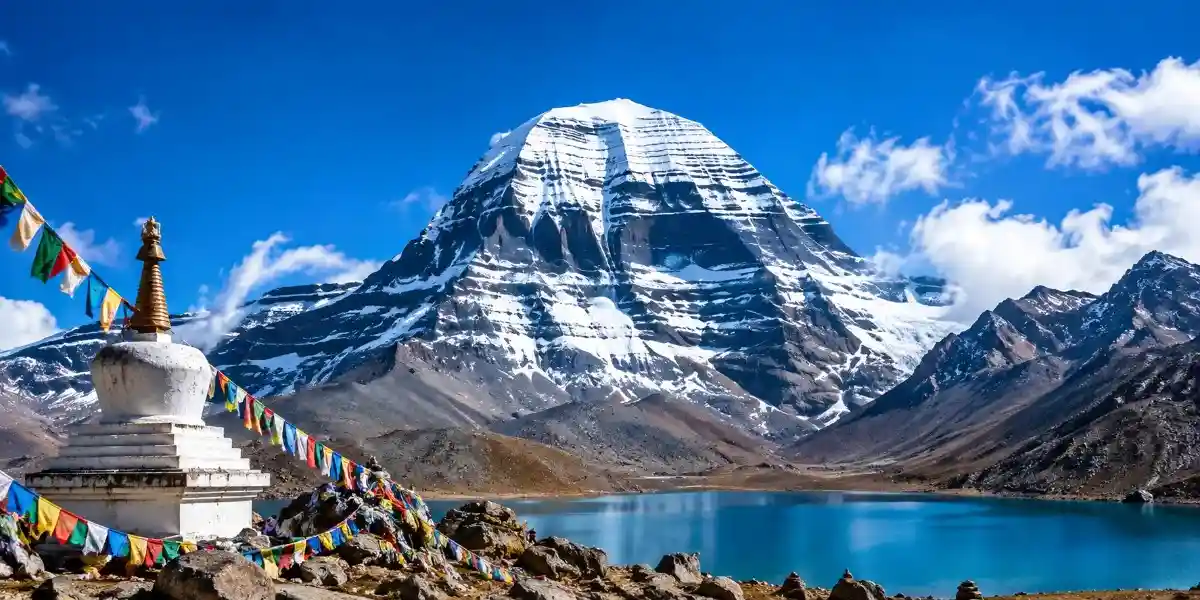
What Is Kailash Mansarovar? A Grand Pilgrimage Through Tibet
Kailash Mansarovar sits in the Tibet Autonomous Region of China, and Mount Kailash rises to about 6,638 metres. Hindus, Buddhists, Jains and followers of the Bon faith consider it sacred, the abode of Lord Shiva. Beside it lies Lake Mansarovar, at about 4,590 metres.
Pilgrims walk the parikrama, roughly 52 kilometres, crossing the demanding Dolma La pass. Since the route lies abroad, it needs proper permits, a Chinese group visa and careful planning ahead of season.
What Is Adi Kailash? India's Own Sacred Peak in Uttarakhand
Adi Kailash is also called Chhota Kailash. It sits in the Pithoragarh district of Uttarakhand. The Adi Kailash elevation is close to 5,945 metres. It looks a lot like the original Kailash in Tibet, but it is smaller and easier to reach.
At its base lies a lake called Parvati Sarovar, near a place called Jolingkong. This pairing of mountain and lake is similar to how Mount Kailash and Lake Mansarovar sit together in Tibet. Close by is Om Parvat, a mountain whose snow naturally forms the shape of the sacred Om symbol.
Because Adi Kailash lies fully inside India, you do not need a passport to visit it. You only need an Inner Line Permit for the border area near Gunji. This is one of the biggest parts of the Adi Kailash and Kailash Mansarovar difference: one trip stays within India, while the other means travelling abroad.
Adi Kailash vs Kailash Mansarovar: Altitude, Distance and Permits Compared
| Feature | Adi Kailash | Kailash Mansarovar |
| Location | Pithoragarh, Uttarakhand, India | Tibet Autonomous Region, China |
| Peak elevation | About 5,945 metres | About 6,638 metres |
| Sacred lake | Parvati Sarovar, Jolingkong | Lake Mansarovar, about 4,590 metres |
| Highest walking point | Around 4,600 to 4,800 metres | Dolma La pass, about 5,630 metres |
| Permit needed | Inner Line Permit (ILP) + Govt Photo ID | Valid Passport, Chinese group visa and Tibet permit |
| Passport required | No | Yes |
| Typical duration | 5 to 7 Days (ex-Kathgodam / Delhi) | 9 to 14 Days (depending on overland/heli route) |
| Difficulty level | Moderate | Difficult, sustained high altitude |
This table shows why the Adi Kailash altitude feels far more forgiving for planning acclimatisation.
Adi Kailash Route From Delhi
The usual Adi Kailash yatra from Delhi runs through Kathgodam or Tanakpur, then climbs into the Kumaon hills towards Dharchula, Gunji and Nabhidhang, before the final walk to Jolingkong.
Most groups plan two to three days of road travel each way, with a trek of around five days in between, so a complete Adi Kailash itinerary wraps up in ten to fourteen days with rest stops. Since the route stays on Indian roads, travel dates remain reliable.
Kailash Mansarovar Routes From Nepal
Pilgrims heading to Tibet usually begin from Kathmandu, a smooth gateway for this yatra. The classic route for Kailash Mansarovar yatra by road passes through Kerung and Saga before reaching Darchen for the parikrama, taking around thirteen days with steady acclimatisation.
For those short on time, Kailash Mansarovar yatra by helicopter cuts the travelling considerably, while an Aerial Darshan by Flight lets pilgrims view the mountain from the sky without the parikrama. Every route from Nepal comes with hotels, meals and guide support included.
Kailash Mansarovar Yatra Cost From Delhi and What Affects It
The Kailash Mansarovar yatra cost from Delhi varies depending upon the mode of journey selected, i.e., through road travel, helicopter or Kailash Mansarovar aerial darshan by flight, as well as its duration and size of the group.
The overland route is relatively economical, whereas the helicopter or aerial route is costlier but less time-consuming. Adi Kailash route from Delhi is comparatively easy in terms of both time and expense.
Which Pilgrimage Suits Senior Citizens and First-Time Trekkers
Adi Kailash suits senior citizens and first-timers better, since the Adi Kailash altitude stays lower and descent is easier if anyone feels unwell. Kailash Mansarovar demands stronger lungs and a medical fitness check, since the parikrama stays past 5,000 metres for extended periods. Many seniors still complete the Tibet yatra successfully with proper preparation and support.
Why Travel With Ojas Travel
Ojas Travel have been organising trips to the Himalayas since 1986. Our team has travelled these routes for years, so we know them well and do not just guess. We take care of permits, visas, hotels and guides for every Kailash Mansarovar yatra package we offer, whether you travel by road, by helicopter, or choose the aerial darshan. As a trusted Nepal tour package provider, we are with you from the day you enquire to the day you come home. Our years of experience mean your trip is in safe hands.
Conclusion
The choice between the Adi Kailash vs Kailash Mansarovar tours depends on your availability, budget, and your body's altitude tolerance. A well-planned Adi Kailash itinerary is suitable for beginners, whereas Kailash Mansarovar continues to be the ultimate tour for those who have the capability to withstand the Tibetan topography. There is no denying the fact that both the tours are spiritually significant. You can speak with expert guides at Ojas Travel to plan whichever yatra feels right for you.
FAQs
Which is more difficult, Adi Kailash or Kailash Mansarovar?
Kailash Mansarovar is tougher since the parikrama crosses Dolma La pass above 5,600 metres. Adi Kailash stays lower, near 4,800 metres, suiting a wider range of fitness levels.
Is Adi Kailash or Kailash Mansarovar better for senior citizens?
Adi Kailash would be more suitable for seniors because of its lower elevation, shorter hiking time, and road access from Delhi. Kailash Mansarovar requires more fitness and medical preparation.
Are Adi Kailash and Mansarovar the same?
No, they are two separate mountains. Adi Kailash sits in Uttarakhand, India, while Mount Kailash and Mansarovar Lake lie in Tibet, China, each with its own sacred history.
Can we see Mount Kailash from Adi Kailash?
No, Mount Kailash in Tibet cannot be seen from Adi Kailash in Uttarakhand. The peaks sit hundreds of kilometres apart, though Adi Kailash offers fine views of nearby Om Parvat