
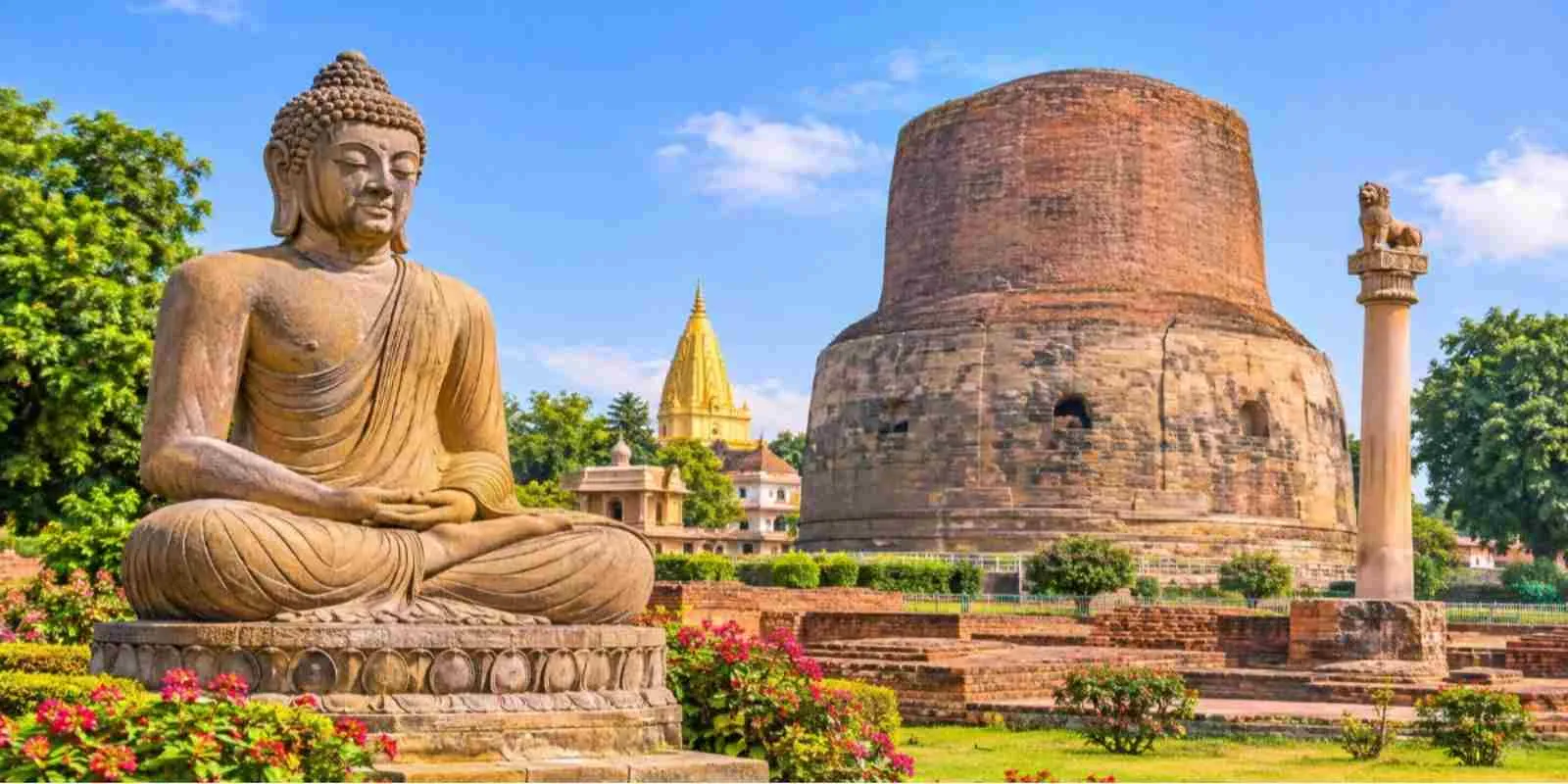
If you’re interested in Buddhism, India has a lot more to offer than just Bodh Gaya and Sarnath. In Bihar, Uttar Pradesh, Maharashtra, and even Nepal, you’ll find monasteries, stupas, and caves that tell the story of Buddha’s life and the growth of Buddhism.
What Is the Buddhist Circuit of India?
The Buddhist circuit is a group of places connected to Buddha’s life, his teachings, and the spread of Buddhism. The most popular route links Lumbini, Bodh Gaya, Sarnath, and Kushinagar, which are tied to Buddha’s birth, enlightenment, first sermon, and Mahaparinirvana. Some travellers also visit Rajgir, Nalanda, Vaishali, Shravasti, and Kapilavastu for a broader experience.
If you’re planning a Buddhist pilgrimage in India, this route is especially rewarding. It brings together sacred sites, archaeological remains, and important centres of Buddhist learning.
Sacred Sites Beyond Bodh Gaya and Sarnath
Rajgir is known for Buddha’s teachings, and Nalanda grew into a major centre of learning. Today, you can see remains like stupas, shrines, and viharas there.
Vaishali is famous for Buddha’s visits and its connection to the Buddhist Sangha. Shravasti is known as the place where Buddha spent many rainy seasons and shared his teachings.
If you’re interested in Buddhist stupas in India, Kesaria stands out for its huge stupa. Other stupas across India also show how Buddhist architecture changed over time.
Kesaria is widely known as the largest Buddhist stupa in India. This impressive landmark in Bihar is hard to forget.
The Four Sacred Life Sites
A full Buddhist journey often includes four key places from Buddha’s life. Lumbini in Nepal is his birthplace. Bodh Gaya is where he reached enlightenment. Sarnath is where he gave his first sermon, and Kushinagar is where he attained Mahaparinirvana.
Visiting Nalanda and Rajgir adds more historical background to your trip. This route also helps you see how Buddhist ideas grew beyond the main pilgrimage sites.
Which Is the Largest Buddhist Site in India?
There is no single official answer if “largest Buddhist site” means the overall archaeological complex. Nalanda Mahavihara is among India’s most significant surviving Buddhist monastic complexes, covering about 23 hectares. It was one of the earliest and longest-serving monastic-cum-scholastic establishments in the Indian subcontinent.
If you’re asking about stupas, Kesaria is the best-known answer because of its massive size.
Which Is the Oldest Buddhist Monastery in India?
Nalanda often comes up when talking about the oldest Buddhist monasteries because of its long history. The ruins there date from the 3rd century BCE to the 13th century CE. Nalanda is truly one of India’s oldest and most important Buddhist monastic centres.
Which Is the Oldest Buddhist Cave in India?
The Bhaja Caves in Maharashtra are considered some of India’s oldest Buddhist rock-cut caves, dating back to around the 2nd century BCE. Their chaitya hall, stupas, and monastic cells are early examples of Buddhist rock-cut architecture. The Barabar caves are even older, from the 3rd century BCE, but they were mainly linked to the Ajivikas.
Why Explore Buddhist Destinations in India?
Buddhist tourism in India is special because it brings together spirituality, history, and architecture. If you’re interested in famous Buddhist temples, you’ll find that the experience is about much more than just temples. You can explore ruins, meditation spaces, stupas, and monasteries, which all help you understand Buddhist history better. Visiting different Buddhist destinations in India also lets you experience local culture and the unique landscapes of each region.
Planning Your Buddhist Pilgrimage
When planning your trip, it’s important to think about travel distances, where you’ll stay, and how much time you’ll spend at each site. For example, a 7-night, 8-day Buddhist pilgrimage tour costs ₹75,000 per person. This price covers accommodation, meals, car or taxi services, driver allowance, parking, fuel, and pick-up and drop-off services.
The tour takes you to Nalanda, Rajgir, Mahabodhi Temple, Kushinagar, Lumbini, Sarnath, Varanasi, and Kapilavastu. You’ll also have a guide to help you along the way. The Mahabodhi Temple is a major highlight and stands out among the famous Buddhist temples in India.
Planning with Ojas Travel
As someone who works at Ojas Travel I know that a good pilgrimage itinerary should be both comfortable and meaningful. Our Buddhist Pilgrimage Tour Package are made for travellers who want to visit important Buddhist sites in India and Nepal without worrying about every detail. The package includes modern hotels, chauffeur-driven transport, meals as listed in the itinerary, guide assistance, and full support throughout your trip. We help you plan everything according to your needs before you book. Our goal is to make spiritual tour packages in India practical and well-organised.
FAQs
What is included in the Buddhist tour?
The package includes transport, accommodation, meals, fuel, parking and transfers. Monument entry fees, insurance, personal expenses and tips are excluded.
Is this route suitable for first-time pilgrims?
Yes. It combines major sacred sites with historic learning centres.
What is the Lotus Path?
The trail is known as the “Lotus path”, connecting Buddha’s birth, enlightenment, sermons and Mahaparinirvana.
Are these packages only for religious travellers?
No. They also suit travellers interested in history, architecture, philosophy and cultural heritage.
Conclusion
India’s Buddhist heritage goes far beyond just two well-known places. From the ancient learning at Nalanda and the huge stupa at Kesaria to Rajgir, Vaishali, Shravasti, and the early caves in Maharashtra, your journey will uncover many chapters of Buddhist history. Visiting these Buddhist destinations in India can turn a regular pilgrimage into a richer cultural and spiritual experience.
If you’re interested in Buddhist tourism in India, planning your route can help you visit sacred sites, archaeological wonders, local culture, and find peaceful moments for reflection. Spiritual tour packages in India make the journey easier to organise, and a well-planned Buddhist pilgrimage in India lets you experience the history and ideas that shaped Buddhism in India and beyond.