
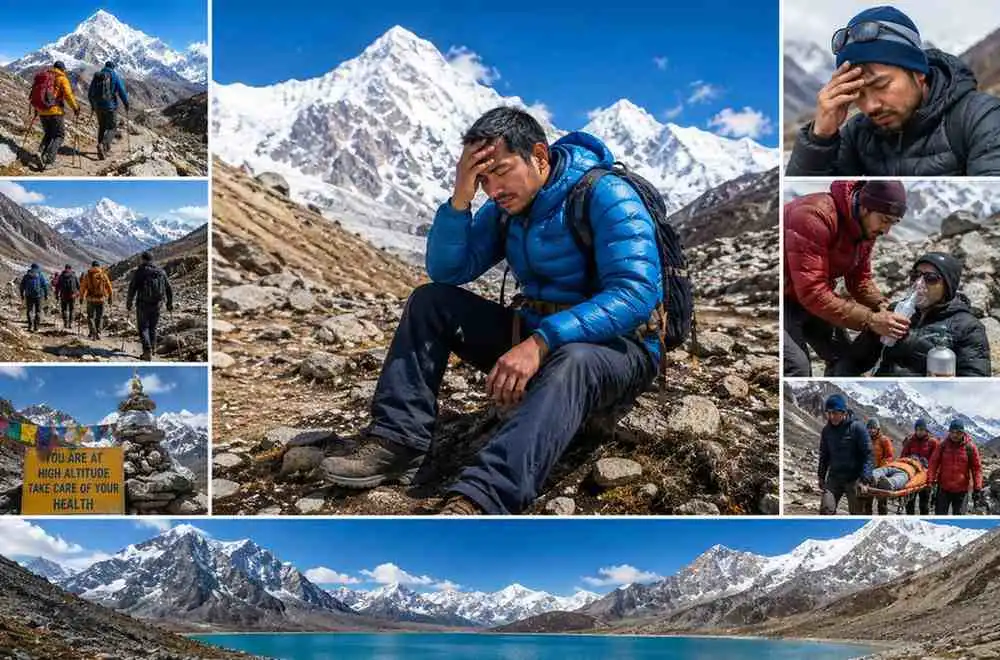
There are no words to describe the emotion of standing beneath a snow-capped peak with prayer flags waving overhead. But the same mountains that attract pilgrims and trekkers to Nepal and Tibet also pose a silent threat that many tourists ignore. The higher you go, the thinner the air is, and your body has to work harder to get each breath.
This is where high altitude sickness typically creeps up on you unannounced. You need to know about this condition if you are going to Muktinath, trekking in Annapurna or preparing for the holy Kailash Mansarovar Yatra. This guide will take you through the symptoms, warning signs, and practical ways to ensure your journey is safe and enjoyable from start to finish.
What Is Altitude Sickness And Why Does It Happen To Travellers
So what is altitude sickness? Simply put, it’s your body’s response to lower oxygen levels as you ascend in altitude, generally above 2,500 metres. The air pressure decreases, so your lungs are taking in less oxygen per breath, and your heart has to work harder to get oxygenated blood around your body.
If you ascend too quickly without acclimatising, you will start to experience symptoms. This is medically called Acute Mountain Sickness, and it can affect anyone, regardless of age or fitness. Even seasoned Kailash mountain climbers are not immune if they ascend too quickly.
Recognising Altitude Sickness Symptoms Before They Worsen
Catching the early signs makes all the difference. Altitude sickness symptoms usually begin mildly and can escalate if ignored. Here is a simple breakdown of what to watch for.
Stage | Common Signs | What It Means |
Mild | Headache, nausea, dizziness, fatigue | Your body's still adjusting, rest and water usually sort it out |
Moderate | Vomiting, breathlessness, poor coordination, restless sleep | Time to pay attention, descent might be needed |
Severe | Confusion, fluid in the lungs, bluish lips, severe breathlessness | This is an emergency, get down immediately |
The AMS symptoms listed under mild and moderate stages are your body's way of asking for a slower pace. Never dismiss a persistent headache as mere tiredness.
Why Kailash Mansarovar Yatra Demands Extra Care
The height of Kailash Mansarovar from sea level works out to roughly 4,590 metres (15,060 feet) at the lake itself, with the parikrama route climbing even higher near Dolma La Pass. That's considerably steeper than most trekking routes across Nepal. Pilgrims spend several days above 4,000 metres, and no amount of prior trekking experience fully immunises you against thin air at that height. Treat acclimatisation with the same seriousness as the spiritual side of the trip.
Not everyone needs to walk the full parikrama on foot. Depending on your fitness and comfort, you can choose the route that suits you best:
- Kailash Mansarovar Yatra by Helicopter: a wise option to minimise physical fatigue and transit times. Well suited to senior citizens or anyone being extra cautious about their health.
- Kailash Mansarovar Yatra by Road: the traditional route, allowing more time to acclimatise naturally at each stop along the way.
Whichever you pick, a well-planned Kailash Mansarovar Package with built-in rest days makes a genuine difference to how your body copes with the altitude. There's no single right choice here, only the one that matches your pace and your health.
Practical Ways To Prevent Altitude Sickness On Your Journey
Prevention is simpler than cure in mountain travel. Wondering how to prevent altitude sickness? Follow these habits.
- Ascend gradually; avoid rushing to higher camps in a single day.
- Drink plenty of water, three to four litres daily, and skip alcohol.
- Eat light, carbohydrate-rich meals rather than heavy, oily food.
- Include rest days to let your body adjust naturally.
- Avoid sleeping much higher than where you spent the previous night.
- Carry basic medication after consulting your doctor before departure.
These small disciplines, followed consistently, reduce the chances of falling seriously unwell.
How Ojas Travel Supports You Through Every High Altitude Journey
Ojas Travel have guided travellers through the Himalayas for decades, with deep roots in this region and genuine Himalayan expertise built through years of trekking and research across these terrains. Our Nepal Tour Package is crafted with proper acclimatisation built into every itinerary, so you are never rushed into danger while exploring these magnificent mountains.
We also run a dedicated Muktinath Temple Tour for pilgrims seeking blessings at this revered shrine nestled amid the peaks. With round-the-clock support, financial protection for your bookings, and honest personal attention rather than a one-size-fits-all approach, our guests keep returning to us, generation after generation.
Summary
The mountains reward patience far more than haste. Understanding altitude sickness is not about fear; it is about respect for the terrain you are visiting. With the correct preparation, reasonable pace and a reliable travel partner like Ojas Travel by your side, the landscapes of Nepal and the sacred pathways towards Kailash Mansarovar become an adventure of a lifetime rather than a health scare waiting to happen.
Frequently Asked Questions
What are the first signs of altitude sickness?
Early symptoms include a slight headache, nausea, dizziness, and unusual fatigue, often within hours of reaching higher elevation. You may also have a loss of appetite and disrupted sleep, showing that your body needs rest and time to adjust.
How to stop altitude sickness fast?
For immediate altitude sickness treatment, stop rising at your present altitude and rest immediately. Drink plenty of fluids and avoid alcohol. You could consider taking light pain medication if you have a headache. If symptoms linger or intensify over several hours, the best remedy is to descend.
How to prepare your body for high altitude?
Do cardio regularly for weeks before you go to build up stamina. Drink lots of fluids. Do not smoke. Do not drink alcohol. Talk to your doctor about preventive medication. The most dependable preparatory strategy is gradual acclimatisation during the actual journey.
Can asthma patients go to Kailash Mansarovar?
Patients with asthma can start the journey after acquiring the required clearance from their doctors. Taking your prescribed inhalers, contacting your tour guide, and a well-planned itinerary with adaptation days reduces the dangers considerably at higher altitudes.