- Understanding the Weather in Muktinath Through the Changing Seasons
- Best Time to Visit Muktinath Temple Based on Weather Conditions
- What to Expect from the Muktinath Temperature in December and the Winter Months
- Route from Gorakhpur to Muktinath: Distance and Travel Time
- Why Travel With Ojas Travel for Your Muktinath Yatra
- Frequently Asked Questions
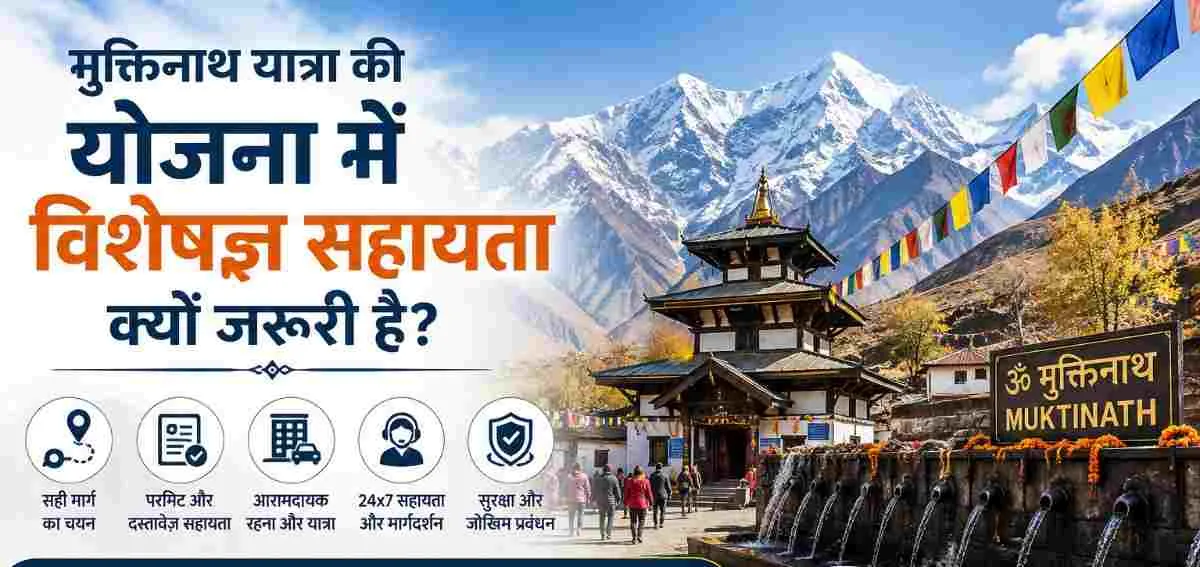
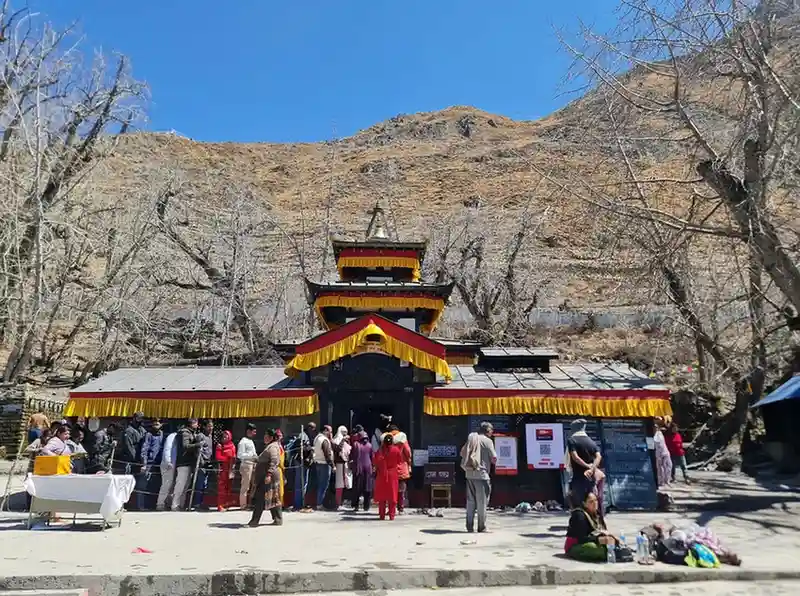
Planning a Muktinath Yatra soon? Getting your timing right can make all the difference between a smooth pilgrimage and a bone-chilling struggle at 3,710 metres above sea level. Nestled in Nepal's Mustang region, this sacred temple draws thousands of pilgrims every year, yet not every month offers the same comfort. Sudden weather swings, snow-bound trails and thin mountain air can turn an easy trip into a tough one if you arrive unprepared.
Whether you travel via Gorakhpur or fly straight into Kathmandu, knowing the weather in Muktinath ahead of time helps you pack right, choose your route and enjoy clearer mountain views. This guide walks you through the seasons, temperatures and travel options so your Muktinath yatra stays peaceful and memorable.
Understanding the Weather in Muktinath Through the Changing Seasons
Muktinath is situated high up in the Mustang district, behind the Annapurna range, where the landscape becomes dry, rocky and windy. Conditions can change rapidly, sometimes within hours. Mornings tend to be bright and calm, while afternoons bring cold, gusty winds sweeping down from the peaks. Here is a quick look at the Muktinath weather pattern:
Season | Months | What You Can Expect | Average Temperature |
Spring | March to May | Clear skies, blooming valleys, pleasant trekking days | 10°C to 20°C |
Summer & Monsoon | June to August | Rain in lower belts, misty upper trails, landslide risk | 15°C to 25°C |
Autumn | September to November | Crisp air, dry trails, best mountain visibility | 8°C to 18°C |
Winter | December to February | Heavy snow, icy roads, freezing nights | -15°C to 5°C |
This region stays cool and dry for most of the year, and winter turns genuinely harsh. The overall temperature in Muktinath Nepal, depends heavily on altitude and season, so a layered wardrobe is always a smart move.
Best Time to Visit Muktinath Temple Based on Weather Conditions
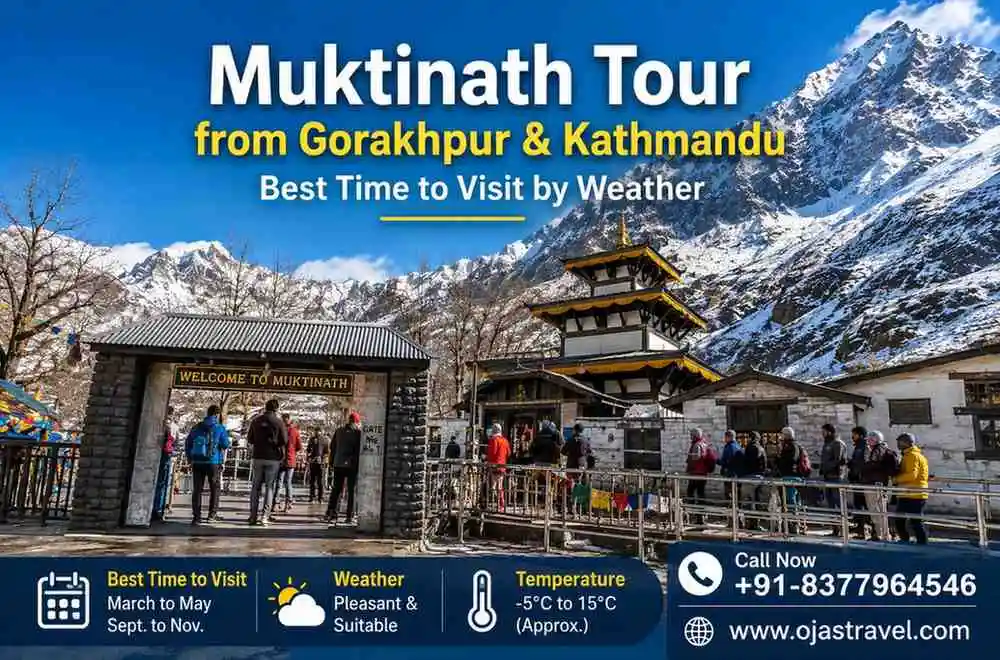
If you ask any seasoned traveller, the best time to visit Muktinath temple is during autumn, roughly September through November. The monsoon clouds clear out, trails dry up, and the Himalayan peaks stand out sharply against a blue sky. A few quick pointers to help you choose your window:
- Autumn (Sep to Nov): Driest trails, clearest views, best for families and elderly pilgrims.
- Spring (Mar to May): Mild days and blooming valleys, a close second choice.
- Monsoon (Jun to Aug): Avoid if uneasy with rain, as landslides can block the Pokhara to Jomsom stretch.
- Winter (Dec to Feb): Quiet and scenic, but only for well-prepared travellers.
These calmer windows bring the most pleasant Muktinath temple weather, making darshan far more comfortable.
What to Expect from the Muktinath Temperature in December and the Winter Months
Winter changes the entire character of this pilgrimage. The Muktinath temperature in December often drops well below freezing at night, and snow can block certain stretches of the Jomsom road for days at a stretch.
Daytime hours remain workable if the sun is out, but layers, sturdy boots and a good sleeping bag become essential. Some pilgrims prefer this quieter season, since the temple sees fewer crowds and the snow-covered valley looks stunning, though transport stays limited and guesthouses turn colder.
Route from Gorakhpur to Muktinath: Distance and Travel Time
For pilgrims coming from Uttar Pradesh and nearby states, the Gorakhpur to Muktinath distance works out to roughly 550 to 600 kilometres via the Sonauli border. Here is how the journey unfolds:
- Gorakhpur to Sonauli border by road, around 2 to 3 hours.
- Sonauli to Pokhara by road, around 8 to 9 hours.
- Pokhara to Jomsom, either a 25-minute flight or a 6- to 7-hour drive.
- Jomsom to Muktinath by jeep or a short trek, roughly 1.5 to 2 hours.
A Muktinath Tour from Gorakhpur typically spans five to seven days, giving enough time to acclimatise, rest and take in the scenery without rushing.
Kathmandu to Muktinath Flight: The Fastest Way to Reach the Shrine
Most travellers arriving in Nepal come by way of Kathmandu. The fastest route from here is a flight from Kathmandu to Pokhara, followed by an early morning mountain flight to Jomsom, and finally a short jeep transfer up to Muktinath.
This route trims travel time considerably compared to an all-road journey, suiting pilgrims with limited holidays. Domestic flights depend on weather clearance, so mornings are usually preferred, and short delays during foggy or windy days are fairly common here.
Exploring the Muktinath Tour via Janakpur for a Complete Pilgrimage Circuit
Most travellers combine their visit with Janakpur, the birthplace of Goddess Sita, for a more spiritual experience. The Muktinath Tour via Janakpur brings you to Kathmandu, Pokhara, Jomsom, Muktinath and Janakpur before returning.
The journey combines the Himalayan landscape with the Mithila culture and the popular Janaki Temple. The tour is perfect for people who desire Muktinath darshan and a cultural detour combined.
Why Travel With Ojas Travel for Your Muktinath Yatra
Ojas Travel have organised Himalayan journeys for decades, with deep, on-the-ground experience across Nepal, Tibet and the wider Himalayan belt. We are a destination management company built around this region, and Muktinath darshan is one of our core specialities alongside Kailash Mansarovar and Pashupatinath pilgrimages.
Booking with us gets you airport pickup and drop, private vehicle transportation, comfortable hotel stays and guided sightseeing, with all required permits sorted in advance. Our itineraries stay flexible around the season and your comfort. Our nepal holiday packages are developed to suit every type of traveller, whether spiritual, adventure or leisure, so you get an itinerary that genuinely fits your pace and your purpose.
Summary
A pilgrimage to Muktinath rewards those who plan with the mountains, not against them. Autumn and spring have the clearest skies; winter takes planning but rewards you with solitude and snow-draped views.
Whether your journey begins from Gorakhpur or Kathmandu, knowing the weather ahead of time lets you focus on what matters most, the darshan itself. Our well-designed Muktinath Yatra Packages cover every stage of this route, so all you need to do is choose your season and set off.
Frequently Asked Questions
Which month is good to visit Muktinath?
September to November and March to May are the best times to visit Muktinath, when skies are clear, road conditions are good, and the weather is moderate for trekking and darshan.
Which waterfall is on the way to Muktinath?
Rupse Waterfall is one of the most popular stops along the Beni–Jomsom road on the way to Muktinath. The waterfall is a refreshing break with dramatic cliffs and is a well-known landmark on this scenic mountain route.
Is the water hot or cold in Muktinath Temple?
The 108 water spouts at Muktinath Temple flow with naturally cold mountain water all year round, which is believed to have purifying properties. There is a small eternal flame burning nearby, which adds to the spiritual importance of the place for pilgrims.
How to reach Muktinath from Gorakhpur?
Travellers drive from Gorakhpur to the Sonauli border, continue by road to Pokhara, then take a flight or jeep to Jomsom, followed by a short trek or drive to reach the Muktinath temple.