- A Complete Guide to the Nepal Route for Kailash Mansarovar and Muktinath Pilgrimage in 2026
- How Monsoon Conditions Can Influence Travel Across Nepal
- Border Connectivity and Road Conditions Continue to Be Important Factors
- Why Choosing an Experienced Tour Operator Makes a Difference
- Why Ojas Travel is a Trusted Choice for Kailash Mansarover and Muktinath Yatra
- Frequently Asked Questions
For many people, a journey to Kailash or Muktinath is something they think about for years before actually doing it. It is not the sort of trip you book overnight. There is faith involved, preparation involved and, usually, a lot of anticipation.
As pilgrims start planning for 2026, one topic keeps coming up. Route conditions. People want to know if roads will be open, if border crossings will be smooth and how weather might affect the journey. Fair questions, honestly. Mountain travel is beautiful, but it does not always go exactly as planned.
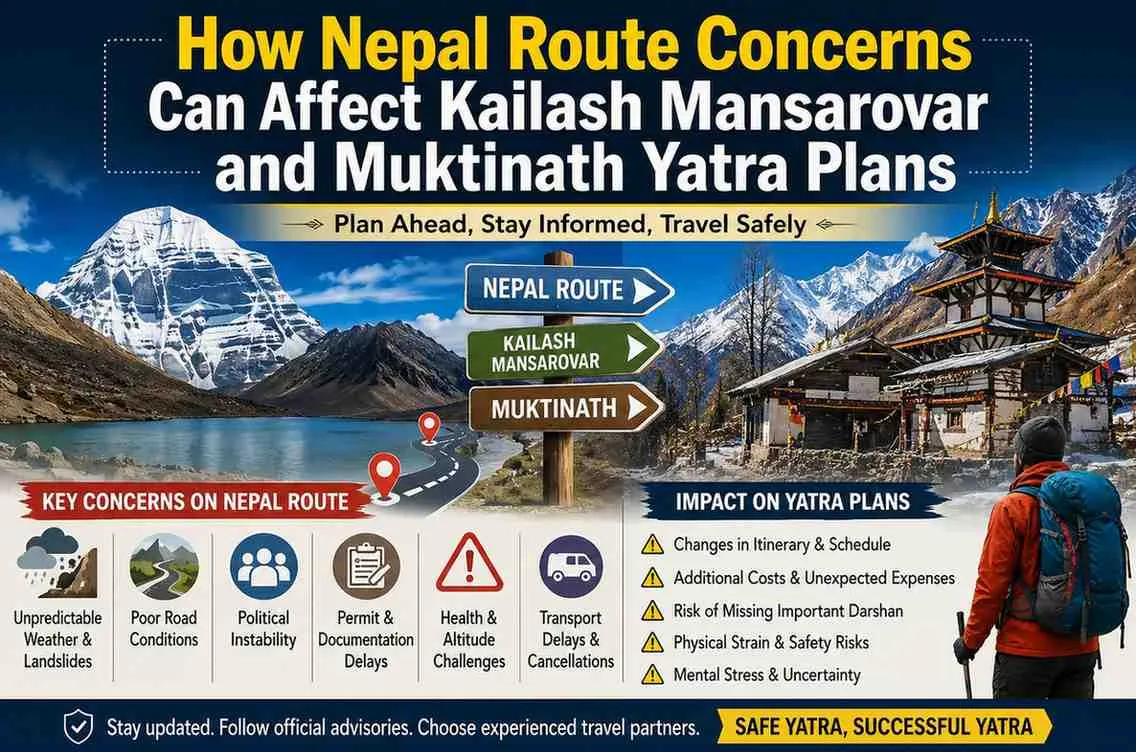
The Nepal route remains one of the most preferred ways to reach these sacred destinations. However, schedules can be affected by periodic weather, road works, and occasional travel disruptions. If you are preparing to undertake the Kailash Mansarovar Yatra or visit Muktinath, knowing these route considerations beforehand can make the journey much less stressful.
A Complete Guide to the Nepal Route for Kailash Mansarovar and Muktinath Pilgrimage in 2026
The overland route through Nepal continues to attract pilgrims from India and around the world. Most journeys begin in Kathmandu and move through Dhunche, Syabrubesi, Rasuwagadhi and Kerung before entering Tibet. From there, travellers continue towards Saga, Mansarovar and eventually Mount Kailash.
Many pilgrims choose this route because it allows them to combine Kailash and Muktinath in a single trip. Spiritually, that makes the journey even more meaningful.
There is also something special about travelling through the Himalayas by road. The mountain views, small villages and changing landscapes become part of the experience. For 2026, the route is expected to remain operational, though travellers should always keep an eye on travel updates before departure.
How Monsoon Conditions Can Influence Travel Across Nepal
Anyone who has travelled in the Himalayas during the rainy season knows that the weather likes to keep everyone guessing.
The annual monsoon in Nepal might affect road connectivity. Heavy rain may cause landslides or temporary road closures in mountain areas.
In Nepal, the monsoon normally lasts from June until August. During the nepal weather in June, travellers may expect to see periodic rain and shifting conditions throughout the day. As the season advances, Nepal weather in July typically delivers more rain, which may create delays on some routes.
That does not mean travel stops. Pilgrimage groups continue their journeys every year. The landscapes become greener, rivers flow stronger, and the mountains look stunning after rainfall.
Border Connectivity and Road Conditions Continue to Be Important Factors
The Nepal-Tibet border remains a key part of the Kailash pilgrimage route. Any disruption along this section can affect travel schedules.
Mountain roads are naturally subject to variable weather conditions. Sometimes you have a few-minute delay due to maintenance work or safety inspections.
The Kerung border is still one of the most frequented entrance sites for pilgrims on their way to Kailash. Experienced tour operators are frequently aware of route changes and change arrangements accordingly.
The best approach for travellers is to stay informed and allow a little flexibility. Himalayan journeys have a way of teaching patience.
Weather Conditions at Kailash and Muktinath Require Extra Preparation
One common mistake travellers make is assuming the weather will stay consistent throughout the journey. It rarely does.
The weather in Muktinath Nepal remains cool for much of the year because of the high altitude. Even on sunny days, mornings and evenings can feel quite cold. Strong winds are also common around the temple area.
The same applies to Kailash Mansarovar weather. Sunshine, chilly winds and sudden weather changes can all happen within a few hours. Carrying layered clothing and basic essentials is always recommended.
Many pilgrims prefer travelling nepal in May weather because conditions are often more stable and mountain views tend to be clearer. Even then, warm clothing should never be left behind.
How Route Concerns Can Affect the Muktinath Pilgrimage Experience
Kailash Mansarovar usually receives most of the attention, but Muktinath travellers can face similar challenges during the rainy season.
Heavy rainfall may occasionally affect road sections connecting Pokhara and Muktinath. Travel times can become longer than expected.
Even so, thousands of devotees complete their Muktinath Mandir Darshan every year without major difficulties. Improved infrastructure has made access much easier compared to the past.
Adding some extra time to the itinerary is often a smart move. Delays feel far less frustrating when you are not rushing from one stop to another.
Why Choosing an Experienced Tour Operator Makes a Difference
Pilgrimage involves far more than just arriving at the final destination. Permissions, accommodation, means of transport, and local logistics also matter in making the trip a success.
An experienced Nepal Travel Agency can help travellers stay updated on route conditions, documentation requirements and weather-related developments. This support becomes especially useful in remote mountain regions.
Good operators also guide travellers on altitude-related precautions and packing requirements. Those small details often make a bigger difference than people expect.
Why Ojas Travel is a Trusted Choice for Kailash Mansarover and Muktinath Yatra
Ojas Travel has been providing pilgrimage tours around Nepal for many years now, and what we have realised is that every tour is unique. Some travellers may be searching for spiritual satisfaction, but others have been waiting many years for their chance to visit these holy places.
To ensure that you have a smooth and comfortable experience, all travel arrangements, accommodations, permits, and logistics are taken care of by our experienced team, who collaborate with reliable local partners. This way, all the pilgrims have to do is enjoy the pilgrimage without being preoccupied with logistics.
We offer a range of carefully planned pilgrimage packages, including Kailash Yatra by Helicopter 2026, Kailash Mansarovar Yatra by Road, and Kailash Mansarovar Aerial Darshan by Flight for travellers looking for different ways to experience the sacred region.
For devotees visiting Muktinath, we also provide the popular Muktinath 06 Nights & 07 Days package and Muktinath By Helicopter, making the pilgrimage accessible for families, senior citizens and those with limited travel time.
From the moment you arrive until your journey is complete, we aim to provide reliable support, local expertise and the confidence that comes from travelling with a team that understands the unique requirements of pilgrimage travel in Nepal.
Conclusion
The Nepal route remains one of the most significant entrances to Kailash Mansarovar and Muktinath Pilgrimage sites in 2026. Although weather and terrain may pose occasional problems, any difficulties faced can be overcome through proper planning.
A little flexibility and realistic expectations go a long way. After all, journeys like these are not only about reaching a destination. They are also about the experiences and memories collected along the way.
Frequently Asked Questions
Does monsoon affect Kailash Yatra?
Yes. Heavy rainfall can affect road conditions and occasionally cause delays. However, organised pilgrimage groups continue operating with proper planning and route monitoring.
Is a helicopter tour better during monsoon?
For many travellers, yes. Helicopter tours reduce long road journeys and can be more comfortable, though flights still depend on weather and visibility conditions.
Is monsoon a good time to visit Nepal?
The countryside becomes beautifully green, and crowds are smaller. Travellers should, however, be prepared for rainfall and occasional travel disruptions.
Can senior citizens do Muktinath Yatra in monsoon?
Yes. Many senior citizens complete the journey successfully each year. Choosing an organised tour with comfortable transport and proper support makes the trip much easier.